Real Estate Sales Training Courses: From Licensing to Competitive Edge

TL;DR. Real estate sales training is the structured set of licensing, negotiation, lead-generation, deal-operations, and soft-skills programs an agent must complete to stay licensed and competitive. The data shows it’s not optional polish — it’s survival infrastructure. Every U.S. state legally requires licensing, and most mandate annual or cyclical continuing education, from Colorado’s 24 hours every three years1 to California’s 45-hour first renewal2. Yet 87% of new agents still fail within five years3. That gap isn’t a motivation problem — it’s systemic: untrained agents convert leads 30-50% lower than trained peers4.
Why State Real Estate Licensing Is the Legal Foundation
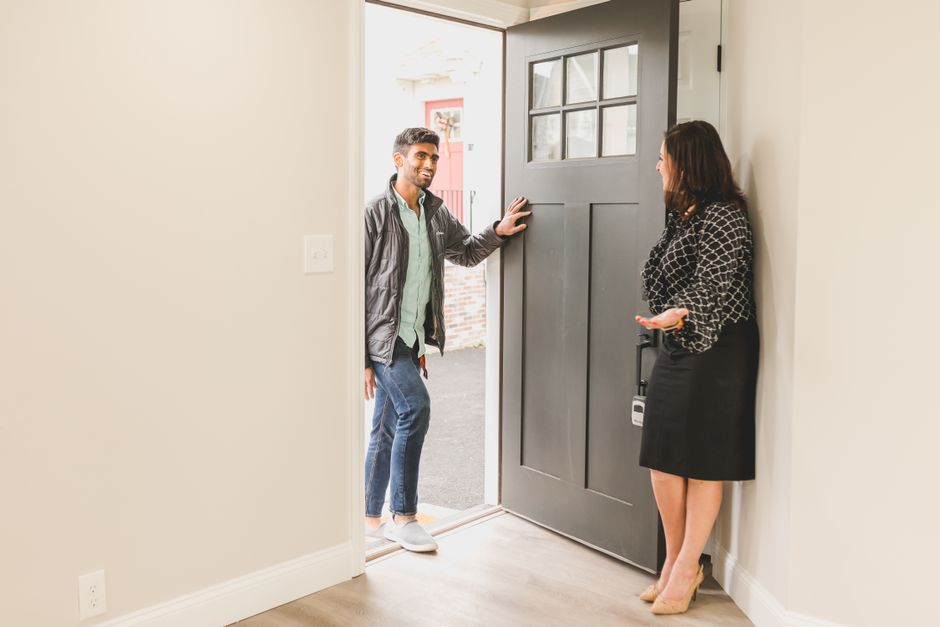
State real estate licensing is the non-negotiable legal gate every agent must pass through before touching a transaction. No state allows a salesperson to represent a buyer or seller without one, and the specific hour counts differ sharply by jurisdiction5. This isn’t bureaucratic friction for its own sake — it’s the reason your new hires show up with wildly different baseline knowledge depending on where they got licensed.
Pre-licensing and renewal requirements vary widely:
| State | Continuing Education (per cycle) | Notes |
|---|---|---|
| Maryland | 15 hours annually, mandatory topics (Contracts, Brokerage Relationships, Ethics)5 | NAR ethics training does not substitute5 |
| Colorado | 24 hours per 3-year cycle; 168 hours pre-licensing^16 | 12 hours must be the Annual Commission Update Course1 |
| Virginia | 11 hours for relicensure, up from 8, effective July 20247 | Includes legal updates, agency, and contracts7 |
Approved providers close the gap between legal requirement and classroom delivery. National schools like Kaplan and Colibri Real Estate hold state accreditation across dozens of jurisdictions, giving brokers a consistent way to verify compliance8.
For a VP of Sales, the takeaway is simple: licensing proves an agent can legally sell. It says nothing about whether they will actually perform once in front of a client. That gap is systemic, not personal — and it’s where training and incentive design have to pick up the work licensing can’t do.
Learn more in our complete guide: What is a Sales Operating System: the loop that transforms results.
Related reading: sales training courses.
What Does Real Estate Negotiation Training Actually Teach?
Real estate negotiation training teaches a specific set of tactics — anchoring, contingency management, authority signaling, strategic silence, concession bundling, and walk-away discipline — and top agents apply them with scripted precision rather than improvised instinct. The research backs this up: a meta-analysis spanning 17 studies and 44 effect sizes found a large overall negotiation-training effect (g = .72), with longer, structured programs outperforming short briefings 9.
Here’s what the training actually covers:
- Anchoring — open with a precise, non-round number backed by three to five comparable sales. Harvard Business School professor Michael Wheeler notes this signals expertise and shrinks the other side’s counteroffer 10.
- Contingency and inspection management — use a tiered framework that prioritizes safety and structural issues first. This tactic has helped buyers save an average of $14,000 11.
- Authority play — invoke brokerage policy or lender requirements to depersonalize a tough ask.
- Silence and patience — a hallmark of Tactical Empathy, the FBI-derived method taught by the Black Swan Group for de-escalating defensive sellers or buyers 9.
- Term bundling — trade rent-back periods, credits, or home warranties instead of just cutting price.
- Walk-away readiness — know your BATNA before you sit at the table, per the Harvard Program on Negotiation 10.
Classroom lectures alone rarely stick. Programs like the Real Estate Negotiation Expert credential build in live-fire exercises — mock listing presentations, inspection responses, cooperating-agent conversations — because scenario repetition, not static content, changes behavior at the table 9.
The gap this training closes isn’t a personality trait. It’s a system most brokerages never formalize — which is exactly why negotiation performance varies so wildly across reps on the same team.
How to Generate Qualified Leads and Prospect for Clients

Qualified lead generation runs on two separate tracks — listing prospecting (farming a geographic area, door-knocking, direct mail) and buyer prospecting (referrals, digital ads, social proof) — and each follows different conversion math. That’s why one generic script never works; you need two distinct playbooks.
| Prospecting type | Primary channels | What drives conversion |
|---|---|---|
| Listing prospecting | Farm strategy, door-knock, direct mail | Local market expertise, repeated touches over time |
| Buyer prospecting | Referrals, digital ads, social proof | Online visibility and fast follow-up |
The split matters because 97% of home searches now start online, and 76% of buyers work with one of the first five agents they find there 12. Agents who rely solely on referrals or a single channel fall behind. The strongest pipelines blend relationship-building with local SEO, social advertising, and CRM-driven follow-up 13. On social platforms, an 80-20 content mix — mostly value, rarely pitch — keeps audiences engaged without burning trust 14.
But the real gap isn’t channel choice. It’s execution. Untrained agents convert leads at rates 30-50% lower than trained peers, and that’s a pipeline-design failure, not a personality flaw 4. A system that routes and tracks leads without relying on a rep’s memory solves what scripts alone cannot.
Digital Marketing and Social Media for Real Estate Sales
Digital marketing works because buyers research online long before they call an agent — not because of any single platform’s algorithm. Industry data shows 97% of home searches now start on the web, and 76% of buyers engage with the top five agents they find there 12. That means visibility, not hustle, decides who gets the call.
LinkedIn, TikTok, and Instagram let agents show property walkthroughs, neighborhood tours, and market commentary directly to buyers who are already searching — without paying for every impression. Social media lets an agent reach a large audience at essentially the cost of content creation, not media spend 14.
Consistency matters more than virality. The recommended mix is 80% helpful, non-promotional content and 20% direct promotion 14 — a ratio that keeps an audience engaged between transactions.
None of this fixes the deeper issue, though: a rep who posts brilliantly but never logs the resulting inquiry still leaves a pipeline that looks empty. Play2sell SalesOS’s Leads module captures those inbound events automatically. A lead generated on Instagram doesn’t die in a DM inbox — it routes, scores, and shows up in the pipeline the moment it arrives.
How to Choose the Right Real Estate Course: Format, Cost, and Certification

Choosing the right real estate course comes down to matching format and cost to a verifiable outcome: state exam readiness for pre-licensing, compliance hours for renewal, and measurable skill gains for sales methodology. Treat these as three separate purchasing decisions, not one.
Pre-licensing: in-person vs. online
In-person pre-licensing programs typically run $300–$600 and require 60–120 classroom hours. Online formats cost $200–$400 and let candidates set their own pace15. California even sets a pacing floor for self-paced study: no more than two courses in any five-week window, and no course finished in under 2.5 weeks16. Either path has to end in the same place — passing the state licensing exam — since every state requires a license to practice17.
Continuing education: compliance, not optional
Renewal hours range from 11 in Virginia to 24 in Colorado to 36–42 in New Mexico, depending on license type^7118. Bundled CE packages from state-approved providers commonly run $100–$300 per agent per year8.
| Course type | Typical cost | Typical hours | What it buys |
|---|---|---|---|
| Pre-licensing (in-person) | $300–$600 | 60–120 hrs | Exam eligibility |
| Pre-licensing (online) | $200–$400 | Self-paced | Exam eligibility |
| Continuing education | $100–$300/yr | 11–42 hrs/cycle | License renewal |
| Sales methodology / negotiation | $500–$3,000/yr | Varies | Closed-deal lift |
Sales methodology: the one with an ROI number
Unlike licensing hours, methodology training — negotiation, prospecting, CRM discipline — isn’t mandated by any commission. That’s exactly why it gets skipped. It costs $500–$3,000 per agent annually, and the math is simple: if it correlates to two additional closings a year, it breaks even within three to six months. Untrained agents convert leads at rates 30–50% lower than trained peers4, so that breakeven estimate is conservative for most teams, not optimistic.
The harder problem isn’t picking the course — it’s knowing which agent needs which module, and whether the training actually changed behavior afterward. That’s a data problem, not a curriculum problem. It’s why Play2sell SalesOS’s RolePlay module ties AI-guided practice to each rep’s real call and deal patterns instead of a one-size-fits-all syllabus.
Which Institutions and Platforms Lead Real Estate Education?
No single institution owns real estate training in the U.S. The system runs as a patchwork of regulators, national education brands, and discount platforms, and that fragmentation explains why training quality varies so wildly by state and by brokerage. The National Association of Realtors sets the ethical framework most agents train under. Each state’s Real Estate Commission, meanwhile, enforces hour requirements and publishes its own approved-provider list, as seen in Maryland5, Colorado1, and Virginia7.
A handful of national providers dominate delivery at scale:
| Provider | Footprint | Positioning |
|---|---|---|
| Kaplan | In-person, online, text-based in 28+ states | Price range $80–$950+ depending on state and program8 |
| Colibri Real Estate (Real Estate Express) | 38+ states plus DC, 520,000+ trained | Tiered packages, $192–$872 full price8 |
| The CE Shop | 43 states licensing, all 50 CE | $139–$935, ranked best overall by a third-party reviewer19 |
| 360training / Udemy-style discount platforms | 14 states prelicensing, 32 CE | Most packages under $2008 |
Before enrolling anywhere, verify state approval directly against your Commission’s list. A cheap course that isn’t approved wastes the hours entirely16. None of these providers, though, train reps on what happens after licensing — how they perform, stay engaged, and get paid. That gap is structural, not a vendor problem. It’s where Play2sell SalesOS’s RolePlay module picks up: AI-guided practice calibrated to real deal patterns, not a static course nobody finishes.
Why Property Valuation and Contract Knowledge Prevent Deal Failure

Property valuation and contract literacy prevent deal failure for a simple reason: unresolved title disputes, botched contingencies, and inflated price anchors kill closings, not bad luck. Agents who skip rigorous valuation training routinely misprice listings and misread contract clauses, and that gap shows up directly in commission and liability exposure.
State regulators treat this as serious enough to mandate it. Virginia now requires 2 hours specifically on real estate contracts for every relicensing cycle, on top of agency and legal-update hours 7. California goes further: salespersons renewing for the first time must complete a dedicated trust fund handling course alongside risk management and fair housing training 2. The state has seen what happens when agents negotiate without that foundation.
Valuation skill closes the gap on the money side. Precise, comp-backed anchors signal expertise and provoke smaller counteroffers, according to Harvard Business School professor Michael Wheeler 10. Tiered, documentation-driven inspection negotiation — leading with safety and structural issues — has saved buyers an average of $14,000 11.
This isn’t a training nice-to-have. It’s the difference between a clean close and a disputed one. And it’s exactly the kind of skill gap Play2sell SalesOS’s RolePlay module is built to close, drilling contract and valuation scenarios with AI before they cost a real deal.
How CRM and Sales Technology Transform Real Estate Operations
Modern real estate operations run on one principle: let the system capture what matters, not the agent’s memory. CRM and sales technology make that possible by automating the capture of prospect intent — inquiries, open-house signups, email clicks — so follow-up happens the moment a signal fires, not whenever someone remembers to log it 12.
That matters because visibility is now a competitive requirement, not a nice-to-have. In 2025, 97% of home searches start online, and 76% of buyers engage only the top five agents they find there 12. The agent — or brokerage — with the cleanest, fastest-responding system wins the inquiry before a human even picks up the phone.
Three layers separate a modern stack from a spreadsheet:
- Capture — CRM platforms like Salesforce, Zoho, and HubSpot log leads and automate nurture sequences 20.
- Integration — feeds from portals and e-signature tools must sync automatically; otherwise, someone ends up re-typing data by hand 20.
- Routing — leads need to reach the right agent based on availability and fit, not just whoever answers first 13.
Most brokerages don’t actually lack a CRM. Their CRM still depends on the rep to type, and that’s the real gap. Play2sell SalesOS’s Leads module closes it: the system captures events through integration and routes leads by performance, so the pipeline reflects what’s actually happening — not whoever had time to update a field.
What Market Trends and Soft Skills Matter Most in 2025 and Beyond?

Buyer behavior, not agent charisma, is shifting the market. Rate sensitivity has made buyers warier and more informed, and today’s top agents win by translating that complexity into plain confidence — not by pushing harder. Soft skills now rival market expertise as the real differentiator: no deal closes without strong negotiation and communication, and consultative trust often matters more than product knowledge21. Agents like Lucy White describe the job as making clients feel supported through a stressful process, not just managing paperwork22.
Digital expectations have moved just as fast. Nearly all home searches start online, and buyers engage with the first few agents who show up and respond quickly12. Agents who are slow to reply or thin on digital presence lose deals to faster competitors — not because they’re worse at the job, but because their system is slower.
This is a training gap, not a talent gap. Untrained agents convert leads 30–50% less often than trained peers, and leads that go unanswered for even a few hours decay out of the pipeline entirely4. That’s exactly the pattern Play2sell SalesOS’s RolePlay module is built to close: guided practice against real scenarios, not static slides nobody finishes.
Frequently Asked Questions
At the national median commission split, a realtor needs roughly 27 closed deals a year to clear $200,000. Here’s the math: the median existing-home sale generates a commission that nets about $7,500 per deal after a typical 5% split to the agent. Divide $200,000 by $7,500 and you land near 27 transactions. That pace sits far above what most agents hit — the median real estate sales agent earned just $52,830 in 2025, and median broker pay was $73,22017. The gap between median pay and $200K isn’t a talent gap; it’s a systems gap. Agents who complete structured onboarding and negotiation training close faster and retain more deals at the offer stage. That’s what moves someone from the median income bracket toward 27+ closings a year by their second year instead of their fourth3.
How long does it take to train to be a real estate agent?
Pre-licensing coursework takes 2 to 6 weeks depending on state requirements and course format, but becoming a consistently productive seller takes 6 to 12 months of structured practice. California’s first-renewal continuing education alone requires 45 clock hours across ethics, agency, fair housing, and consumer protection topics2, while New Mexico brokers must complete 36 to 42 hours per three-year cycle just to stay licensed18. Licensing is the floor, not the ceiling. A documented 90-day onboarding roadmap — systems and compliance in week one, prospecting in week two, buyer consultations and offer writing in week three, objection handling by week four — is what typically gets a new agent to their first closed deal3.
Who has the best real estate training program?
There is no single best program. Fit depends on your vertical, your budget, and whether you’re solving a licensing problem or a performance problem. NAR-approved providers and state-published lists, like Maryland’s or Virginia’s CE catalogs, guarantee regulatory compliance7. But compliance training doesn’t fix lead generation or negotiation gaps, which is why 87% of new agents still fail within five years according to coaching authority Tom Ferry3. The real differentiator sits at the brokerage level: standardized onboarding, performance-driven coaching, and visible accountability consistently outperform generic course libraries, regardless of which vendor delivers the content3.
This is the gap Play2sell SalesOS’s RolePlay module is built to close — AI-guided practice tied to real sales context, not a static course nobody finishes, paired with gamified missions calibrated to your team’s actual performance data instead of a generic curriculum. If your onboarding pipeline is still measured in PDFs and informal shadowing, the next step isn’t buying another course. It’s auditing where your reps actually lose deals — at the offer stage, in follow-up, or in the first 90 days.
Next Steps: Build a Scalable Training and Lead-Execution System
Training alone won’t fix a broken sales operation. It has to pair with a system that routes leads by performance and captures every interaction automatically. Most brokerages treat training as the fix for weak conversion, but the real bottleneck is operational: 33% of new agents quit within their first year, and 87% don’t last five years — almost always citing insufficient income rather than lack of skill23. That’s not a training gap. It’s a system that leaves agents chasing cold, randomly-assigned leads with no visibility into what’s working.
If leads get distributed by rotation instead of by who’s actually closing, your best-trained agents starve for opportunities while undertrained reps burn through inquiries that needed a specialist. Training only reinforces a playbook when the system hands agents the leads that playbook was built for.
This is precisely the gap our Leads module in Play2sell SalesOS closes: it captures inbound inquiries — web forms, open-house signups, social ad clicks — without requiring manual CRM entry, then routes them automatically based on agent performance and specialization. Every touch gets logged, so managers see pipeline reality instead of guesswork.
Your next three steps
- Audit your current lead source and routing logic — is it performance-based or arbitrary?
- Identify your top 3 bottlenecks: prospecting time, deal velocity, or commission accuracy.
- Map each bottleneck to a training and technology fix, then request a demo to see intelligent routing and performance tracking in action.
- https://dre.colorado.gov/broker-continuing-education — https://dre.colorado.gov/broker-continuing-education ↩
- https://www.dre.ca.gov/licensees/cerequirements.html — https://www.dre.ca.gov/licensees/cerequirements.html ↩
- https://www.proprofstraining.com/blog/real-estate-agent-training — https://www.proprofstraining.com/blog/real-estate-agent-training ↩
- https://digitalmaverick.com/blog/sales-training-for-real-estate-agents — https://digitalmaverick.com/blog/sales-training-for-real-estate-agents ↩
- Continuing Education Requirements (Number of Hours and Course Content Required) – Maryland Real Estate Commission (MREC) — https://labor.maryland.gov/license/mrec/mreceducreq.shtml ↩
- Broker Qualifying Education | Division of Real Estate — https://dre.colorado.gov/division-programs/real-estate-broker/education/broker-qualifying-education ↩
- Real Estate Board: Continuing Education | Virginia Department of Professional and Occupational Regulation — http://www.dpor.virginia.gov/Continuing_Education ↩
- The Best Online Real Estate Schools — https://realestate.usnews.com/real-estate/articles/the-best-online-real-estate-schools ↩
- 7 Negotiation Training Courses for Real Estate Agents — https://www.ashbygraffcareers.com/2026/09/15/negotiation-training-courses ↩
- How to Negotiate Home Price: 6 Proven Strategies From Top-Performing Agents — https://www.effectiveagents.com/resources/how-to-negotiate-home-price-6-proven-strategies-from-top-performing-agents ↩
- Six Real Estate Negotiation Tactics with Scripts for Agents — https://www.myeracareer.com/post/negotiation-tactics-real-estate ↩
- https://www.linkedin.com/pulse/top-real-estate-marketing-strategies-drive-leads-listings-idqxc — https://www.linkedin.com/pulse/top-real-estate-marketing-strategies-drive-leads-listings-idqxc ↩
- https://www.nextdoorprograms.us/blog-for-realtors/real-estate-lead-generation-ultimate-guide — https://www.nextdoorprograms.us/blog-for-realtors/real-estate-lead-generation-ultimate-guide ↩
- https://www.360training.com/blog/real-estate-social-media-marketing-tips — https://www.360training.com/blog/real-estate-social-media-marketing-tips ↩
- Top Online Platforms for Real Estate Classes — https://www.connectionrealestateschool.com/post/top-online-platforms-for-real-estate-classes-a-guide-to-online-real-estate-education ↩
- Education Course Availability (Statutory/Pre-License Courses) – DRE — https://dre.ca.gov/examinees/EducationCourses.html ↩
- Real Estate Brokers and Sales Agents: Occupational Outlook Handbook — https://www.bls.gov/ooh/sales/real-estate-brokers-and-sales-agents.htm ↩
- Real Estate Commission Continuing Education Requirement | NMRLD — https://www.rld.nm.gov/boards-and-commissions/individual-boards-and-commissions/real-estate-commission/instructors-training-requirements-and-continuing-education ↩
- Best Online Real Estate Schools (Reviewed & Ranked) — https://www.youtube.com/watch?v=1IlnOv3doyQ&vl=en-US ↩
- Effective Lead Generation Strategies for Real Estate Agents — https://www.kwpeninsulaestates.com/effective-lead-generation-strategies-for-real-estate-agents ↩
- https://scs.georgetown.edu/news-and-events/article/9281/six-soft-skills-for-real-estate-success — https://scs.georgetown.edu/news-and-events/article/9281/six-soft-skills-for-real-estate-success ↩
- https://www.asreb.com/blog/real-estate-agent-skills — https://www.asreb.com/blog/real-estate-agent-skills ↩
- https://www.youtube.com/watch?v=Nutb6WPwAB8 — https://www.youtube.com/watch?v=Nutb6WPwAB8 ↩