AI Sales Training: Transform Your Team’s Performance With Intelligent Skill Development

TL;DR. AI sales training replaces static workshops with adaptive, AI-driven simulations and feedback engines, turning skill-building into a continuous, measurable process instead of a one-off event. It fixes a structural failure, not a motivation problem: new hires take 6–12 months to reach full productivity under traditional onboarding1, while AI-driven coaching correlates with a 3.7x higher likelihood of hitting quota, according to Gartner research cited in 2026 industry analysis2. The real issue is reinforcement. Most managers simply don’t have the bandwidth to coach every rep, every week, for a year.
How AI Is Transforming Sales Training and the Sales Process

AI is transforming sales training by replacing one-time workshops with continuous, AI-driven practice and feedback woven into the rep’s daily workflow. This fixes the structural flaw that made traditional training forgettable in the first place. The core problem was never effort — it was architecture. A seminar delivers information once, and the human brain discards most of it within weeks without reinforcement, per the Ebbinghaus forgetting curve cited in 2026 industry research 3.
AI roleplay platforms attack that decay directly. Reps practice daily instead of quarterly. Feedback gets scored instantly rather than delayed until a manager finds time, so skill retention holds where workshop-only training collapses 4.
The same logic now extends past training into live selling. AI coaching tools surface objection-handling and discovery prompts during a call or demo. Post-call analysis replaces the monthly one-on-one that managers rarely have bandwidth to run consistently 5.
Upstream, AI-driven lead scoring and pipeline intelligence connected to the CRM turn prospecting from a rep’s gut instinct into a data-ranked target list, compressing the qualification stage 6. This is the same principle behind Play2sell SalesOS’s Leads module: distribution and routing driven by performance data, not manual triage, so reps spend qualification time on accounts most likely to close.
Downstream, AI copilots extend the sales process past the signature, flagging renewal risk and upsell windows a manager would otherwise catch too late 7.
Learn more in our complete guide: What is a Sales Operating System: the loop that transforms results.
Related reading: free sales training.
Which AI Tools Should Your Sales Team Use?
The right AI tool depends on which bottleneck you’re solving — content creation, CRM data capture, skill practice, or pipeline intelligence. No single platform does all four well. Here’s how the categories stack up:
| Category | Best for | Limitation |
|---|---|---|
| General LLMs (ChatGPT) | Drafting pitches, objection scripts, fast content | No deal context, no coaching memory 3 |
| AI CRM copilots (Salesforce, HubSpot) | Lead scoring, next-best-action, activity logging | Only works if reps already adopted the CRM 8 |
| Roleplay simulators (Second Nature, Hyperbound, Kendo.ai) | Onboarding, skill certification, repeatable practice | Realism varies; some reps report bots that are too agreeable to push back meaningfully 9 |
| Enablement & conversation intelligence (Gong, Mindtickle) | Post-call coaching, content tracking | Backward-looking — reviews what already happened, not what’s next 10 |
Roleplay tools matter most where ramp time is the bleeding wound: published customer data shows AI-driven practice cuts ramp time 22–29% 4. But practice alone won’t fix a CRM nobody updates. That’s a data-capture problem, not a training one, and it calls for a different layer entirely.
How to Choose an AI Sales Training Program
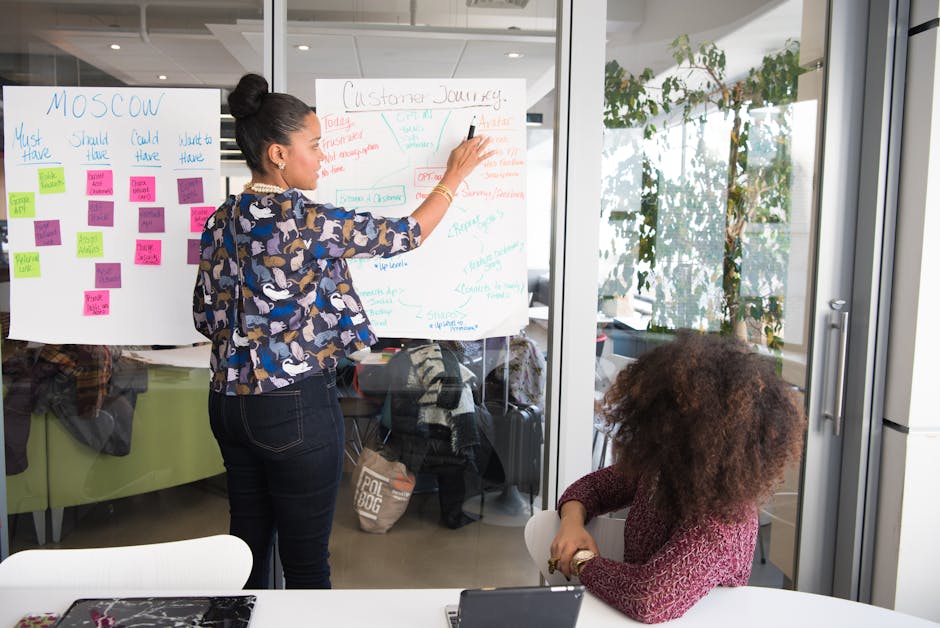
Choosing an AI sales training program comes down to five checks: curriculum scope, certification credibility, time investment, integration depth, and cost-benefit against completion and deal outcomes. Skip any one, and you end up with a tool reps try once and abandon.
Start with scope. A program that drills only cold-call openers but ignores discovery, objection handling, and post-sale upsell leaves half the revenue cycle untrained. The three-category breakdown of the market — roleplay, coaching analytics, enablement content — shows that most vendors specialize rather than cover the whole funnel 10.
Credibility matters for enterprise buyers. Free courses build awareness, but paid corporate programs or university tracks carry more weight when reps need a recognized credential 11. Integration isn’t optional, either: a platform that lives outside your CRM adds friction, and reps will route around it.
| Format | Typical time investment | Best fit |
|---|---|---|
| Free platforms | 10–20 hours | Awareness, individual upskilling |
| Corporate/paid programs | 40–80 hours | Structured onboarding |
| MBA/university tracks | 12–24 months | Leadership, credential-building |
Paid AI roleplay tools often run $50–$300 per user annually — a cost that only pays off if ramp time shrinks and deal quality improves 4.
None of this fixes the root issue if practice sits disconnected from real pipeline data. That’s exactly the gap Play2sell SalesOS RolePlay closes, grounding guided practice in your team’s actual sales context instead of a generic script.
What Does an AI-Driven Sales Training Program Look Like?
An AI-driven sales training program replaces one-off workshops with a tiered system of scenario-based roleplay, automated scoring, and certification. Programs typically scale by depth. Entry-level tracks run 20–40 hours mixing live sessions with self-paced modules. Bootcamps run 60–100 hours. Certification tracks extend past 200 hours over three to six months11.
| Tier | Hours | Format |
|---|---|---|
| Entry-level | 20–40 | Live + self-paced |
| Bootcamp | 60–100 | Cohort-based practice |
| Certification track | 200+ | 3–6 months, graded |
Curriculum blocks cover discovery, objection handling, closing, product knowledge, and vertical-specific scenarios. AI layers roleplay against buyer personas on top of each block12. Platforms like Second Nature build scenarios automatically from uploaded decks and call recordings, then score talk-to-listen ratio and methodology adherence9. AI-scored transcripts certify progress instead of attendance, and feedback lands within minutes instead of the weeks a manager review usually takes13.
What Results Should You Expect From AI Sales Training?

Run the numbers before you run the program. AI sales training delivers measurable results, not aspirational ones: faster ramp, higher conversion, shorter cycles, and payback inside two quarters. The figures below come from vendor and industry data — not projections — so you can model them against your own pipeline math.
| Metric | Before | After AI training | Source |
|---|---|---|---|
| New-rep ramp time | 6 months | 10–12 weeks (65% faster) | 14 |
| Deal conversion rate | 2% | 4.5%+ | 14 |
| Meetings booked | baseline | +46% | 2 |
| Sales cycle length | baseline | 20–30% shorter | 6 |
| Win-rate lift | baseline | +22% | 4 |
Turnover tells the same story from a different angle. Teams with formal, reinforced coaching close the gap between the 95% of reps who say coaching matters and the 38% who actually get it 15. That gap is a structural retention risk — not a training-content problem.
Run the math on a 10-rep team spending roughly $1,000 per rep annually. A 10% conversion lift on $50,000 average deals pays the program back in one to two quarters. That math is why we built RolePlay into Play2sell SalesOS: AI-guided practice tied to real deal context, not a standalone course nobody finishes.
Next step: audit your current ramp time against the 10–12 week benchmark above. Then pilot structured practice with one cohort before you scale it.
How Does AI Sales Training Work Across Different Sales Models?
Across every segment, the bottleneck looks different on the surface but behaves the same way underneath: reps need repetition they can’t get from a manager who has 20 other things to do that week.
| Segment | Primary AI use case | Measured outcome |
|---|---|---|
| B2B enterprise | Roleplay on discovery calls, multi-threading, procurement objections | Teams embedding AI into core selling workflows see revenue uplift potential up to 20% 16 |
| B2B mid-market/SMB | AI roleplay for product and competitive-landscape onboarding | New hires reach quota 65% faster, cutting ramp from roughly six months to 10–12 weeks 14 |
| Retail and automotive | Floor-to-close roleplay, price-resistance objections, demo technique practiced against AI personas | Coverage extends to in-person, video, and phone meetings — not just calls 17 |
| Inside sales / SDR | Cold-call openers, gatekeeper bypass, meeting-setting language, scored at volume | Without AI, SDR ramp has stayed stuck between 6 and 9 months despite CRM and enablement investment 13 |
| Social selling / ABM | AI agents drafting personalized outreach and prepping video introductions | An AI outbound agent generated 35% of pipeline within three months for one enterprise deployment 18 |
In enterprise B2B, the gap is depth — reps need reps on multi-threaded discovery calls and procurement pushback, situations too complex to fake with a script. In mid-market and SMB, the gap is speed — new hires need to internalize product and competitive positioning fast enough to hit quota before they burn out or quit. Retail and automotive need volume across formats: in-person, video, phone — not just scripted calls. SDR teams need raw repetition on cold opens and gatekeeper language, scored consistently enough to catch what’s actually working. Social selling and ABM need personalization at a scale no human can sustain manually.
The mechanism stays constant even as the use case shifts: AI simulates the conversation, scores it, and compounds practice reps couldn’t get from a manager alone. None of these bottlenecks gets fixed by more manager hours — only by a system that practices and scores continuously.
How Much Does AI Sales Training Cost, and What’s the ROI?

Prices for AI sales training span from $0 for self-directed free content to $500+ per rep annually for integrated enterprise suites. But ROI doesn’t track the price tag — it tracks how much governance surrounds the tool. The real return comes from faster ramp and higher conversion, both measurable within 90 to 180 days 15.
What each pricing tier actually buys
| Tier | Price | What you get | Typical outcome |
|---|---|---|---|
| Free (YouTube, LinkedIn Learning) | $0 | Self-directed, no accountability | Low completion, content forgotten fast 15 |
| Freemium/entry (ChatGPT Plus, HubSpot free tier) | $10–50/user/mo | Limited scenarios, individual use | Useful for self-improvement, not team rollout |
| Mid-market roleplay (Hyperbound, Kendo.ai, Second Nature) | $55–200/user/yr, enterprise plans reportedly from $15,000/yr 10 | Structured practice, scorecards | 2:1 to 4:1 ROI over 12 months, 22–29% faster ramp 4 |
| Enterprise suites (CRM + AI coaching) | $200–500+/user/yr | Integrated pipeline intelligence | 5:1 to 10:1 ROI at 50+ reps with governed adoption 6 |
Here’s the calculation that matters: take faster ramp plus conversion lift, subtract platform cost, then divide by time to break-even. That break-even point typically lands at 12 to 18 months — or as fast as six months with disciplined rollout 4. Discipline is the variable, and it’s where most budgets leak. Practice without structured accountability produces the free-tier outcome at a mid-market price. Our RolePlay module exists precisely to close that gap.
What Are the Common Mistakes When Implementing AI Sales Training?
Most AI sales training rollouts fail for structural reasons, not because the technology is weak. Teams buy a tool, skip workflow integration, and ignore the comp and governance questions that decide whether reps actually use it. The research is consistent: the failure mode is adoption, not capability. One analysis found the obvious failure is low adoption — reps try a few prompts in week one, then revert to old habits 19. Another found the root cause is sequencing: companies deploy AI before they define a strategy for how it fits daily selling motion 20.
Five mistakes show up repeatedly:
| Mistake | Why it breaks the program |
|---|---|
| No workflow integration | Reps only use the tool when forced; it never becomes habit 19 |
| No reinforcement cadence | Skills decay fast without spaced practice — most new information is lost within days absent reinforcement 3 |
| Misaligned comp | Training teaches discovery; commission still rewards call volume, so coaching gets ignored |
| Unclear ownership | Nobody owns lead routing or coaching data, so adoption stalls |
| Generic scenarios | Roleplay that doesn’t mirror your actual ICP and objections doesn’t transfer to real calls 21 |
This is precisely why Play2sell SalesOS treats training as part of the operating layer, not a side tool. RolePlay ties practice to real deal context captured automatically, so reinforcement and governance aren’t bolted on after the fact — they’re the architecture.
How Do You Embed AI Training Into Daily Sales Routines?

Embedding AI training into daily sales routines means anchoring it to four fixed moments: before the call, after the call, in the weekly cycle, and inside governance that ties scores to pay. Treat it as infrastructure, not an event. Reps only retain skills built through repeated, feedback-driven practice — not a one-time workshop 13.
- Pre-call prep (T-30 min): AI surfaces next-best-action and suggested discovery questions, and reps review and personalize them. Adoption rises once reps see concrete time saved, not abstract promises.
- Post-call review (same day): Transcript and AI scoring on discovery quality and objection handling land within hours, not weeks. Real-time coaching during the call itself still underperforms this "practice-then-perform" model 13.
- Weekly micro-coaching: AI flags team-wide bottlenecks and assigns short, targeted modules, and managers prioritize based on the trend, not instinct.
- Governance: Define who owns CRM updates and how AI scoring feeds compensation. Embedding methodology into daily workflow — not just deploying a tool — is what sustains adoption 7.
| Moment | Traditional | AI-integrated |
|---|---|---|
| Feedback timing | Weeks later, if at all | Hours 3 |
| Practice volume | A few per week | Unlimited, 24/7 3 |
This is precisely the gap Play2sell SalesOS Gamification closes: it converts weekly performance trends into verifiable badges and missions tied to real compensation, so engagement outlasts the first two weeks.
Frequently Asked Questions
No. AI augments coaching, prospecting, and deal analysis — it doesn’t replace the rep who owns the relationship and makes the close. The technology’s job is to surface patterns and reduce admin load; decision authority stays human 7.
Do we need to replace our CRM to use AI training tools?
No. Leading AI roleplay and coaching platforms integrate with the CRM you already run via API or webhook, rather than requiring a swap 9. Choose tools that sit above your stack, not ones that force you to rebuild it.
How long before we see ROI?
Expect early signals — faster ramp, quicker first deals — within 60 to 90 days. Fuller returns, including cycle compression and retention gains, typically land on a 12 to 18 month payback curve when adoption is governed and tied to incentives 4.
What if our team resists AI coaching?
Resistance is diagnostic, not terminal. It usually means the tool doesn’t fit the real workflow, or managers aren’t reinforcing it. Pilot with your top performers first, calibrate scenarios to your actual deals, and keep the system assistive rather than a surveillance layer.
Next Steps: Build Your AI-Enabled Sales Operating System
Closing the gap between scattered AI pilots and a durable sales operating system requires a structured, five-step rollout — not another standalone tool bolted onto an already-fragmented stack. The sequence below moves you from diagnosis to governed scale in roughly one to two quarters.
- Diagnose the gap. Audit ramp-up time, rep productivity by tenure, and conversion rate by stage. SDR ramp commonly sits between six and nine months despite existing CRM and enablement investment 13. That number tells you where AI-driven practice will move the needle fastest — openers, enterprise discovery, or objection handling.
- Pilot with a cohort. Run an 8–12 week program with 3–5 reps or one segment. Track adoption, call quality, and deal progression before you commit budget team-wide.
- Embed into your operating system. Training that lives outside daily workflow decays; it has to connect to lead routing, call prep, and live coaching. This is the structural logic behind Play2sell SalesOS: RolePlay drives AI-guided practice, Leads routes opportunities by performance, Gamification sustains engagement past the first two weeks, and Pay ties compensation to verified behavior — all layered above your existing CRM, not replacing it.
- Measure and govern quarterly. As one analysis puts it, "the best B2B sales training pairs a methodology with reinforcement, since workshops fade in weeks without coaching cadence and on-the-job practice" 12. Track adoption, cycle time, and ramp speed against that standard.
- Scale with ownership. Assign who coaches, who audits data, and who maintains the tooling, then audit monthly for drift. Talk to a Play2sell specialist to design your rollout.
- Why Traditional Sales Training Fails (And How AI-Powered Simulations Fix It) — https://virtway.com/blog/traditional-sales-training-fails-how-ai-powered-simulations-fix-it ↩
- What Is B2B Sales Training? Strategies, AI Tools, ROI (2026) | Apollo — https://www.apollo.io/insights/b2b-sales-training ↩
- Traditional vs AI Sales Training: 2026 Comparison + Verdict — https://www.pitchmonster.io/blog/traditional-vs-ai-powered-sales-training-comparison ↩
- AI Sales Training Software: 17 Best Platforms 2026 — https://secondbody.ai/articles/ai-sales-training-software ↩
- AI Sales Coaching vs. Traditional Sales Training for Revenue Acceleration — https://www.revenuegrowthagent.com/post/ai-sales-coaching-vs-traditional-sales-training ↩
- AI Sales Tools ROI: Key Metrics to Track — https://overloop.com/blog/ai-sales-tools-roi-key-metrics-to-track ↩
- AI in Sales Training | Richardson Sales Performance & Challenger Solutions — https://www.richardson.com/sales-resources/ai-sales-training ↩
- https://www.highspot.com/blog/ai-sales-enablement — https://www.highspot.com/blog/ai-sales-enablement ↩
- https://secondnature.ai/second-nature-vs-hyperbound-which-ai-sales-roleplay-platform-is-right-for-your-team — https://secondnature.ai/second-nature-vs-hyperbound-which-ai-sales-roleplay-platform-is-right-for-your-team ↩
- https://www.easygenerator.com/en/blog/e-learning/best-ai-sales-training-software — https://www.easygenerator.com/en/blog/e-learning/best-ai-sales-training-software ↩
- https://kendo.ai/blogs/b2b-sales-training-programs — https://kendo.ai/blogs/b2b-sales-training-programs ↩
- https://www.joinvalley.co/blog/top-b2b-sales-training-programs-techniques — https://www.joinvalley.co/blog/top-b2b-sales-training-programs-techniques ↩
- https://secondbody.ai/articles/what-is-ai-sales-training — https://secondbody.ai/articles/what-is-ai-sales-training ↩
- AI Sales Training ROI: Traditional vs AI Coaching — https://kendo.ai/blogs/ai-sales-training-roi-analysis ↩
- 11 Best AI Tools for Sales Training Programs (2026) — https://www.disco.co/blog/best-ai-tools-for-sales-training-programs ↩
- Best AI Sales Training Platforms: 2026 Comparison — https://www.retorio.com/blog/what-is-ai-sales-training-software ↩
- The 8 best AI sales training tools in 2026 — https://www.ask-marvin.ai/en/blog/best-ai-sales-training-tools ↩
- Best AI Sales Tools for B2B Sales Teams in 2026 — https://www.11x.ai/guides/ai-sales-tools-b2b-sales-teams ↩
- https://www.insivia.com/sales/ai-sales-training/guide/mistakes-risks — https://www.insivia.com/sales/ai-sales-training/guide/mistakes-risks ↩
- https://founderz.com/blog/common-mistakes-ai-b2b-sales-marketing — https://founderz.com/blog/common-mistakes-ai-b2b-sales-marketing ↩
- https://www.mindtickle.com/blog/best-ai-role-play-tools — https://www.mindtickle.com/blog/best-ai-role-play-tools ↩