Halloween Marketing Campaigns: A Strategic Playbook for October Revenue Growth

TL;DR. Most small and mid-sized stores leave Halloween revenue on the table — not from lack of effort, but because execution breaks down before it ever reaches the customer. In 2023, US consumers spent $12.2 billion on Halloween, and over 70% of Americans took part in some form of celebration1. The gap isn’t a demand problem. It’s that marketing, sales, and fulfillment plan in silos, with no shared, real-time view of what’s actually converting. Stores that segment offers by audience and product type consistently outperform generic sitewide discounts2.
When to Start and Key Deadlines: The September–October Planning Calendar

Start a Halloween campaign six to eight weeks before October 31, not the last week of October — nearly half of shoppers have already begun buying by September2. Treat it as a fixed calendar with four checkpoints, not a loose intention.
- September 15 — Inventory audit and offer design. Confirm stock, lock in niche-specific offers, and align marketing, ops, and sales on what ships and what doesn’t. Since nearly half of shoppers start buying in September or earlier, this is also when 2026 collections and early-access pages need to go live3.
- October 1 — Email build-out. Draft the full sequence, test subject lines, and set automation triggers. This is also the earliest point most stores begin promoting bundles and creator content2.
- October 15–20 — Creative rollout. Launch countdown mechanics and urgency messaging across social and web. Demand compresses sharply as the date nears2.
- October 25–31 — Final push. Flash sales and stock-depletion messaging convert the last wave of shoppers before the date passes2.
This isn’t a marketing nicety. It’s the same discipline a revenue leader applies to a sales pipeline: fixed checkpoints, owned by named teams, with no step left to memory.
Learn more in our complete guide: What is a Sales Operating System: the loop that transforms results.
Related reading: digital marketing lead generation.
Why Audience Segmentation by Niche Drives Higher Conversion
Audience segmentation by niche means tailoring Halloween offers, messaging, and timing to how each product category’s buyer actually shops. Done right, it closes the gap between a generic sitewide sale and a campaign that converts. Circana’s 2025 data shows costume dollar sales split 60% children’s versus 40% adult2. Beauty categories moved on an entirely different curve, with prestige eyeshadow up 20% year over year in the two weeks before November 12. Those aren’t the same shopper, and treating them as one audience wastes the budget you already spent getting them to your site.
| Vertical | Positioning | Launch Window |
|---|---|---|
| Fashion | Costume/athleisure crossover bundles | Aug 25 |
| Beauty | "Upgrade your look," not costume | Mid-October |
| Food & Beverage | Limited-edition flavors, gift bundles | Sep 20–Oct 31 |
| Kids | Safety, quality, parent messaging | Sep 1 |
| Pet | Matching owner+pet sets, UGC | Oct 10–25 |
| Home | Party-hosting narrative | Through Oct 31 |
This staggering matters because shopping intent itself is staggered. Roughly half of consumers begin buying in September or earlier4, while pet-related Halloween spending is a distinct, newer behavior rather than an afterthought tacked onto costume budgets5. A single October 31 push can’t serve six different timelines at once.
How Email Automation Sequences Drive Repeat Engagement and Conversion
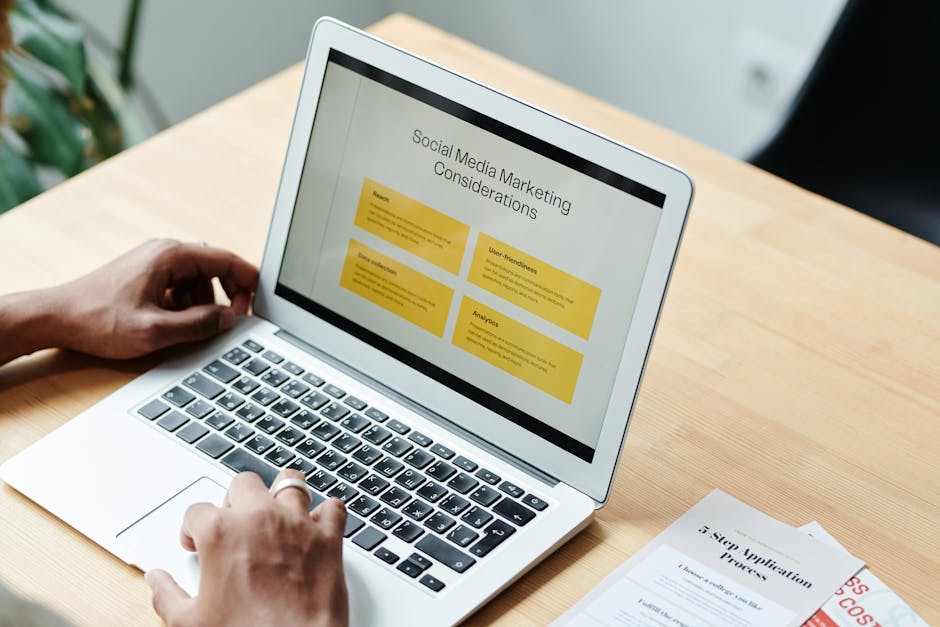
Email automation for Halloween works best as a staged sequence rather than a single blast. Three distinct phases, each with its own message and target metric, run across roughly six weeks leading into October 316.
- Awareness (Oct 1–7): A welcome email followed by a "Shop Our Halloween Edit" message carrying a modest incentive. This phase aims for a 25–30% open rate as early-bird shoppers — nearly half of whom start before October — begin browsing7.
- Mid-season (Oct 8–20): A cart-abandonment re-engagement email, a best-seller showcase by category, and a brand-story or creator email target 20–25% conversion from the engaged segment.
- Urgency (Oct 21–31): A countdown email, a free-shipping-threshold nudge, and a flash-sale message with a time-locked CTA aim to lift conversion 15–20% through deadline pressure.
| Phase | Window | Core mechanic |
|---|---|---|
| Awareness | Oct 1–7 | Incentive + welcome |
| Mid-season | Oct 8–20 | Re-engagement, social proof |
| Urgency | Oct 21–31 | Countdown, scarcity |
Countdown timers in subject lines raise opens roughly 23%. Scarcity language such as "Only 5 left," paired with a single-click CTA, drives two to three times more clicks than generic calls to action8.
None of this works if a rep has to trigger each send manually. That’s precisely the execution gap Play2sell SalesOS Gamification closes — governing cadence and incentive timing systemically, rather than leaving it to memory.
What Promotion Mechanics and Urgency Triggers Maximize Final-Week Conversion?
Final-week conversion lift comes from stacking three mechanics — tiered discounts, bundle offers, and countdown-driven scarcity — rather than relying on a single blanket sale. Each mechanic targets a different buyer mindset. Sequencing them correctly produces the conversion gains, not the discount size alone.
| Phase | Dates | Mechanic | Effect |
|---|---|---|---|
| Early-bird | Sept 25–Oct 10 | 10% off + free shipping on $50+ | Captures planned shoppers, lowers cart abandonment |
| Mid-season | Oct 11–24 | Buy-2-Get-1 or costume+accessory bundles | Lifts average order value 18–25% |
| Final-week flash | Oct 25–31 | 20–25% off, 24–48-hour countdown windows | Drives urgency-driven and repeat buyers |
Flash sales tied to a holiday deadline convert roughly 35% better than random flash sales. The deadline is real and tied to a date shoppers already have on their calendar, per Scale Growth Digital, 20268. The recommended structure: a 24–48-hour window — not five overlapping sales — so the countdown stays credible9.
Scarcity language compounds this effect. Pairing inventory counters with deadline countdowns in subject lines — "Killer Halloween Sale: 20% off – ends at midnight" — lifts email conversion further by combining FOMO with urgency, per Enchant Agency, 202610. Countdown timers embedded directly in last-chance emails make the exact cutoff visible, reinforcing the same mechanic across every touchpoint6.
None of this works if the underlying rep or store data behind "units remaining" and "orders closed today" is stale. That’s a systems problem, not a copywriting one.
How Visual Theming and Brand Identity Amplify Campaign Momentum Across Channels

A coordinated visual identity across every touchpoint — website, email, social, and packaging — is what turns a one-off Halloween discount into a campaign shoppers remember and pay a premium for. Scattershot theming reads as noise. Consistent orange-and-black accents, repeated typography, and a single brand voice read as intention, and intention is what justifies price.
Each channel reinforces the others, but in different ways:
| Channel | Core tactic | Why it matters |
|---|---|---|
| Website hero/banners | Spooky-playful imagery with brand colors plus orange/black accents, CTA rotated by urgency phase | A/B testing static vs. animated banners reveals which creative actually lifts clicks, not just impressions 2 |
| Branded Halloween header graphics, consistent CTA color and copy, Outlook-safe layout | Most opens still happen in clients where broken design kills conversion, so safe formatting protects the campaign’s reach 7 | |
| Social (TikTok, Instagram, Reels) | UGC costume content, behind-the-scenes mashups, interactive polls | Contests built on user-generated costume content drive 4x higher click-through than brand-made posts 8 |
| Packaging | Branded tape, tissue, stickers, unboxing hashtag | Scarcity-driven seasonal packaging is a proven lever for FOMO-based purchasing 4 |
Treat these as one system instead of four separate checklists, and that consistency is what compounds reach heading into November.
That same systemic logic — one engine driving every surface instead of five disconnected efforts — is exactly the gap Play2sell SalesOS’s Gamification module closes on the sales floor: verifiable, consistent recognition instead of a leaderboard nobody looks at by week two.
What Do Winning Halloween Campaigns from Leading US and Global Brands Look Like?
Winning Halloween campaigns share one trait: they treat the holiday as a measurable system, not a one-off promotion. The payoff shows up in revenue lift that outpaces prior-year baselines.
Heinz built a shoppable, omnichannel event instead of a static sale page for its Tomato Blood livestream campaign. The result: over 16 million impressions across platforms and more than 315,000 replay viewers in the first two days — more than double the expected live audience11. Burger King took a different route in 2023 with "The Call," a campaign built on horror-film tropes that pushed Ghost Pepper Whopper searches up more than 50%12. M&M’s has run its "Halloween Rescue Squad" candy-refill promotion for three consecutive years now, layering influencer partnerships (Nicole "Snooki" Polizzi) onto a recurring, dated mechanic rather than reinventing the idea each season5.
| Brand | Mechanic | Measured result |
|---|---|---|
| Heinz | Shoppable livestream | 16M+ impressions, 315K+ replay views11 |
| Burger King | Horror-themed ad + AI call tool | 50%+ search lift on featured item12 |
| M&M’s | Recurring annual promotion | Third consecutive year, celebrity-backed5 |
The pattern holds internationally too. Halloween has grown into Britain’s third-biggest retail event, with UK spending tripling since 2013 to £776 million in 202412. None of these results came from a logo recolor on October 31. They came from campaigns planned, dated, and measured weeks in advance.
Why Is Halloween a Structural Revenue Opportunity in the US Market—and How Large Is It?
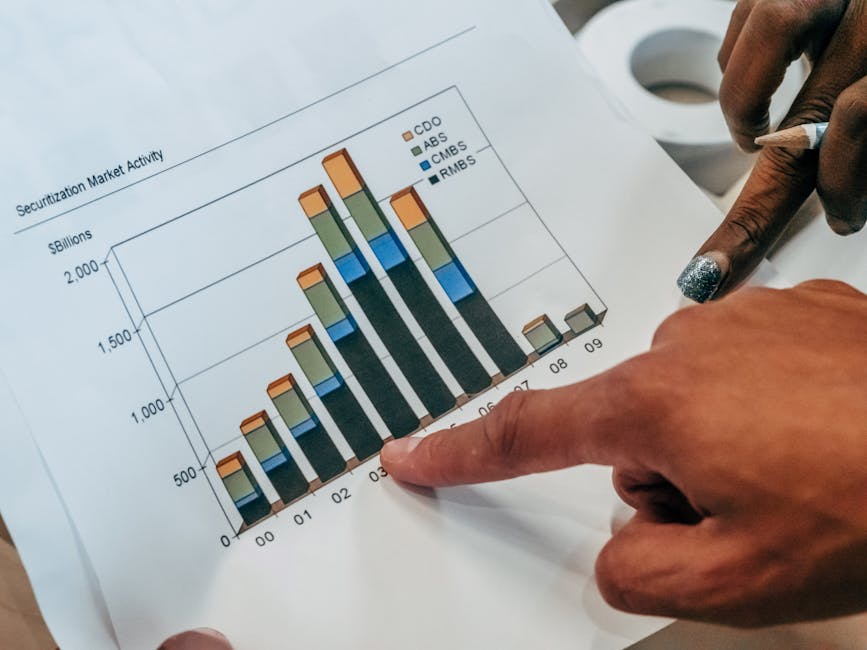
Halloween has outgrown its one-night-occasion status. For US retailers, it now functions as a structural, recurring revenue event. In 2025, total US Halloween spending reached a record $13.1 billion, up from $11.6 billion in 2024 and above the prior 2023 record of $12.2 billion, according to the National Retail Federation 13. Participation is broad and stable, too: 73% of Americans said they planned to celebrate in 2025, holding at pre-pandemic levels 13.
Spending is concentrated but multi-category — which is exactly why a single discount code never captures the full opportunity:
| Category | 2025 national spend | Per-person spend |
|---|---|---|
| Costumes | $4.3 billion | $37.62 4 |
| Decorations | $4.2 billion | $36.85 4 |
| Candy | $3.9 billion | — 14 |
| Greeting cards | $700 million | $5.74 4 |
Timing compounds the opportunity. Nearly half of shoppers, 49%, say they begin buying in September or earlier 2. Gen Z shoppers push that window even earlier: they spend an average of $328 and skew 70% toward digital channels, shopping earliest and online 4. That advance-intent window is exactly where a structured campaign calendar, rather than a last-week promotion, decides who captures the revenue.
How Do You Transition Halloween Momentum Into Black Friday Without Cannibalizing Sales?
The transition from Halloween to Black Friday works best as a deliberate pause, not a straight line of discounts. Retailers that close out Halloween cleanly on November 1 and hold regular pricing for five to seven days before reopening with Black Friday messaging on November 15 protect full-price revenue. That pause also rebuilds the urgency that drives conversion later15.
This matters because over half of marketers allocate most of their holiday campaign budget to November. Brands still discounting through early November are competing against that spend with a tired, discount-fatigued list15. Halloween buyers are also described as the warmest Black Friday audience of the quarter — but only if the relationship isn’t burned out by back-to-back promotions16.
A practical sequence:
- Send a clear "Halloween Sale Ending" message October 31.
- Hold standard pricing November 1–7 to reset the urgency baseline.
- Introduce gift guides and a Black Friday preview around November 8.
- Give high-value Halloween buyers early access November 13.
- Launch Black Friday November 15.
Urgency-driven sequences convert well specifically because the deadline is real. Holiday-tied flash sales convert 35% better than random ones — a signal that overlapping, back-to-back "sales" dilute the very mechanism retailers are trying to use8.
For a sales organization, the same principle applies internally: incentive cadence needs defined start and stop points, or reps stop responding to the signal at all.
What Metrics and Analytics Should You Track to Prove Halloween Campaign ROI?

Proving Halloween ROI starts with a straightforward comparison: weigh revenue, cost, and retention from October 1–31 against a September baseline, using 8–10 core metrics spanning email, website, and sales data7. The standard KPI set includes total revenue, conversion rate, coupon redemption, average order value, and engagement metrics like email open and click rates7.
A practical ROI dashboard
- Revenue attribution — Subtract the September average from October 1–31 revenue, then isolate email-driven sales with UTM tagging and assisted-conversion reports.
- Email performance — Track open rate, click-through rate, and revenue per email sent. Gamified formats like mystery-discount reveals lifted click-through by 28% versus standard promotional sends8.
- Website behavior — Monitor landing page traffic, bounce rate, and cart abandonment. Cart abandonment averages 70.19% industry-wide, and it’s worth tracking separately for Halloween-themed recovery flows8.
- Average order value (AOV) — Compare October AOV to the September baseline to measure bundle and upsell impact.
- Customer acquisition cost (CAC) — Divide total spend by new customers acquired, then check that figure against lifetime value.
- Attribution mix — Most small and midsize retailers rely on last-touch attribution, but multi-touch modeling gives you better spend allocation across email, social, and organic channels17.
- Repeat purchase rate — Measure the share of Halloween buyers who return by December 31.
Setting SMART goals — specific, measurable, achievable, relevant, time-bound — keeps this dashboard from turning into a vanity-metrics exercise7. Email deserves the heaviest weight in your attribution model: it returns $36 for every $1 spent1. Flash sales tied to a real holiday deadline convert 35% better than random promotions8, and your dashboard should isolate that gap by campaign type12.
Frequently Asked Questions
Run the inventory audit and finalize your offer in the first half of September, then have email sequences and creative live by October 1. Nearly half of shoppers already start Halloween purchasing in September or earlier, so a campaign that launches mid-October competes for whatever demand is left18. Reserve October 20–31 for urgency mechanics — countdown timers, flash sales, last-chance shipping cutoffs.
How many emails should we send in October?
Five to seven emails across the six-week window (October 1–31) hits the sweet spot. Plan at least three to four emails, and build the schedule backward from your last guaranteed delivery date rather than from October 31 itself6. Segment by engagement: give inactive subscribers two to three touches, and send engaged buyers the full sequence.
Should Halloween and Black Friday promotions run back-to-back?
No. Pause discounting November 1–7 to reset urgency and protect full-price revenue, then open a Black Friday preview November 8–14 before the full event. Treat Halloween as a dedicated testing ground for Black Friday Cyber Monday mechanics — pricing, segmentation, offer format — not as a lead-in sale17.
How do we know if the campaign ROI was positive?
Subtract your September baseline revenue and total marketing spend from October revenue to get net Halloween ROI. Track revenue per email sent alongside conversion rate, coupon redemption, and average order value as core KPIs7.
Which product categories perform best during Halloween?
Costumes peak from late September through mid-October, beauty peaks in the final two weeks, and candy and decor sustain demand across the full month2.
From Campaign Planning to Team Execution: Your Next Step
A perfectly timed Halloween campaign still fails when marketing and sales operate as two disconnected systems. Nearly half of shoppers begin buying in September 2, and 49% of 2026 Halloween shoppers started before October even opened 16. That means the inbound surge hits your team before your internal calendar says "go."
Here’s the structural failure: you build a flawless five-email sequence with a flash sale on October 29–31 9. But if your sales reps and fulfillment staff don’t see that calendar, two things break at once.
- Inventory mismatches. A limited-edition drop or BOGO push 4 generates orders your warehouse wasn’t staffed for.
- Lead response lag. Website traffic spikes from a teaser email, but no one owns real-time routing. Inquiries sit unanswered while urgency — and the customer — evaporates.
- Incentive misalignment. Reps aren’t rewarded for speed during the exact 48-hour windows when flash-sale urgency is real 9, so order velocity stalls precisely when it should accelerate.
The fix isn’t a better email template. It’s mapping your Halloween dates and targets into a shared operations calendar: use Play2sell’s Leads module to route high-intent Halloween traffic to the right rep in real time, and deploy Gamification — ranks, streak bonuses, verified badges — so the whole team feels October 31’s urgency, not just marketing.
Next step: book a 15-minute call with our team to audit your current October plan and flag one quick win — lead routing or incentive structure — that turns a seasonal spike into team-wide revenue.
## Sources- Halloween Email Marketing: Is It Worth It? | Mailpro — https://www.mailpro.com/blog/halloween-email-marketing ↩
- 50 Halloween Marketing Ideas for Ecommerce Stores (2026) – Fast Bundle — https://fastbundle.co/blog/halloween-marketing-ideas ↩
- 10 Halloween Marketing Ideas for Small Businesses | EstgoMAX — https://estgomax.com/blog/halloween-marketing-ideas-small-business.html ↩
- https://www.productsdesigner.com/blog/halloween-marketing-ideas — https://www.productsdesigner.com/blog/halloween-marketing-ideas ↩
- https://brand-innovators.com/brands-arent-afraid-of-halloween — https://brand-innovators.com/brands-arent-afraid-of-halloween ↩
- Halloween Email Marketing: Ideas & Subject Lines (2026) — https://elasticemail.com/blog/halloween-email-marketing ↩
- Halloween Marketing Campaigns: Spooky Ideas and Automation Tips — https://marketing-automation.ca/en-us/blog/halloween-marketing-campaigns-spooky-ideas-and-automation-tips ↩
- 21 Halloween Marketing Ideas That Drive Revenue — https://scalegrowth.digital/resources/halloween-marketing-ideas ↩
- Halloween Marketing Ideas: 13 Ways Shopify Stores Sell More — https://www.kovax.ai/blog/halloween-marketing-ideas ↩
- 10 Subject Line Tips: BOOst Halloween Email Campaigns — https://www.enchantagency.com/blog/halloween-subject-lines-email-marketing-campaign-tips ↩
- Halloween Marketing Campaigns: 14 Examples — https://www.shopify.com/enterprise/blog/halloween-marketing-campaigns ↩
- Halloween Marketing Campaigns 2026: 10 Best Examples & Strategy Guide — https://www.wearebottle.com/blog/ultimate-halloween-marketing-campaigns ↩
- Halloween Spending Statistics — https://www.consolidatedcredit.org/financial-news/halloween-spending-statistics ↩
- 70+ Halloween Statistics and Spending Trends (2026) — https://www.sender.net/blog/halloween-statistics ↩
- https://www.outbrain.com/blog/best-halloween-content-marketing-campaigns — https://www.outbrain.com/blog/best-halloween-content-marketing-campaigns ↩
- https://webcontrive.com/blogs/newsroom/shopify-halloween-marketing-ideas — https://webcontrive.com/blogs/newsroom/shopify-halloween-marketing-ideas ↩
- 6 Halloween Marketing Campaigns with Real Brand Examples (2026) — https://www.klaviyo.com/blog/halloween-email-and-sms-examples ↩
- https://nexfal.com/blogs/insights/halloween-marketing-ideas-shopify-stores — https://nexfal.com/blogs/insights/halloween-marketing-ideas-shopify-stores ↩